
If you’re living and working in Singapore, this routine probably sounds familiar: rush to work, grab kopi or teh on the way, quick lunch at the hawker centre, sit through meetings all day, then dinner late at night.
You feel okay. No pain. No obvious health issues.
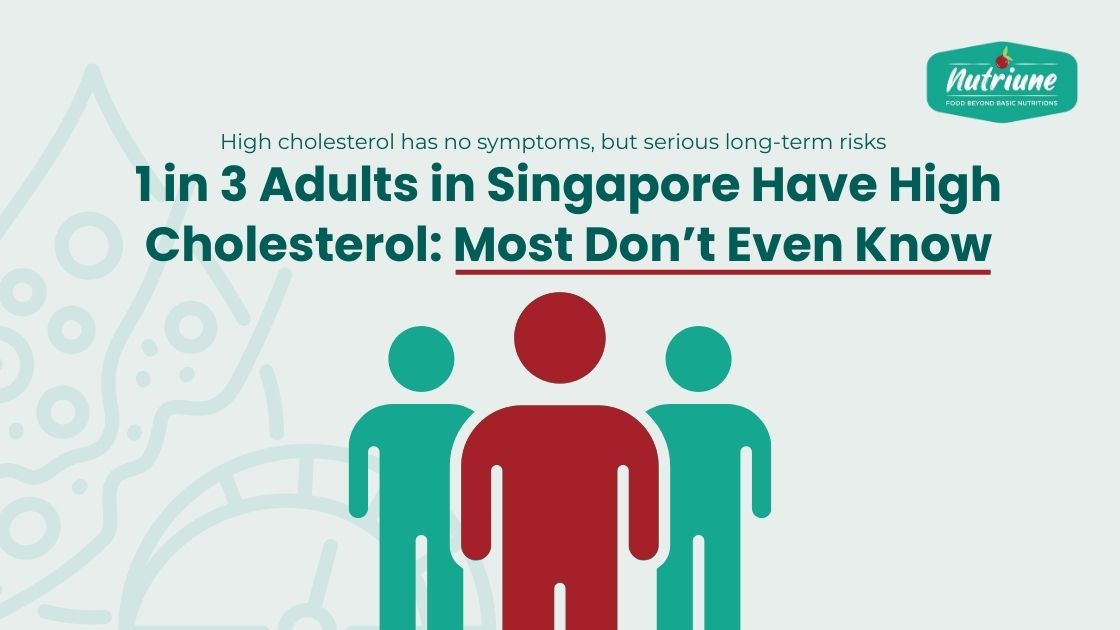
That’s why high cholesterol often goes unnoticed. According to Singapore’s National Population Health Survey, about one in three adults in Singapore has high blood cholesterol. Many only discover it during company health screenings or routine check-ups.
High cholesterol doesn’t announce itself. It builds up quietly over time which is why understanding it early matters.
Understanding Cholesterol and How It Builds Up
Cholesterol is a fatty substance found in your blood. While your body needs some cholesterol to function, excess levels especially low-density lipoprotein (LDL) can gradually accumulate in your arteries.
According to the World Health Organization, elevated cholesterol is one of the leading contributors to cardiovascular disease worldwide. What makes it dangerous is that buildup happens slowly over years, often without noticeable symptoms.
Learn more about daily nutritional support for heart health on Nutriune.
Why High Cholesterol Is So Common in Singapore
High cholesterol in Singapore isn’t about one bad habit. It’s usually the result of everyday lifestyle patterns that slowly add up.
Our Food Is Convenient, But Not Always Heart-Friendly
Singaporeans are lucky when it comes to food. Hawker centres are affordable, accessible, and part of daily life. Chicken rice, char kway teow, prata, nasi lemak comforting and familiar.
The issue isn’t eating these foods occasionally. The problem comes when:
- Most meals are eaten outside
- Fried or oily dishes become the default
- Fibre and vegetables are often missing
Many popular local dishes are higher in saturated fats, which can gradually raise LDL “bad” cholesterol when eaten frequently. It’s not about giving up local food it’s about balance over time.
Diets high in saturated fat and low in fibre have been consistently linked to higher LDL cholesterol levels.
Sitting All Day Is Part of the Job
Many jobs in Singapore involve long hours at a desk. Sitting most of the day, combined with work stress and limited movement, affects how the body handles fats.
This is why some people are surprised when their health screening shows high cholesterol even if their weight seems normal and they feel fine.
Cholesterol Often Increases With Age (Quietly)
As we enter our 30s and 40s, metabolism naturally slows. Cholesterol levels tend to rise even if eating habits haven’t changed much.
Genetics also play a role. Some people are more prone to high cholesterol regardless of diet, making regular monitoring and early management important.
Why High Cholesterol Matters (Even If You Feel Normal)
Cholesterol becomes a concern when too much LDL builds up in the bloodstream. Over time, it can stick to blood vessel walls, narrowing them and restricting blood flow.
This increases the risk of heart attack and stroke. Because high cholesterol often shows no symptoms, managing it early helps reduce long-term health risks before they become serious.
What Actually Helps Lower LDL Cholesterol
One of the most researched natural ways to lower LDL cholesterol is soluble fibre, especially oat beta-glucan.
Scientific studies have shown that:
- Consuming at least 3g of oat beta-glucan daily can help reduce LDL cholesterol
- LDL levels may decrease by 5-10% with consistent intake
- Benefits can occur without drastic dietary changes
This is why oats are commonly recommended for heart health by medical professionals.
Why Soluble Fibre Is So Effective
Soluble fibre works by forming a gel-like substance in the digestive tract, which binds bile acids and removes cholesterol from the body. This process encourages the liver to use more circulating LDL cholesterol, effectively lowering blood levels over time.
Scientific evidence supporting this mechanism can be found on National Institutes of Health.
For a practical way to increase intake, explore Nutriune.
The Role of Diet Patterns in Cholesterol Control
It’s not just individual foods that matter, but overall eating patterns. Diets that emphasize whole foods, fibre, and balanced nutrients tend to support healthier cholesterol levels over time.
For example:
- Diets rich in whole grains and vegetables
- Regular intake of soluble fibre
- Reduced consumption of processed and fried foods
These patterns create a long-term environment in the body that supports heart health.
Explore real-life results on Nutriune.
Realistic Ways Singaporeans Can Manage Cholesterol
Managing cholesterol doesn’t require extreme changes. Small, consistent habits are more sustainable.
Eat More Fibre (Without Overthinking It)
Soluble fibre helps bind cholesterol in the digestive system and remove it from the body. It can be found in oats, beans, lentils, and fruits like apples and citrus.
For busy Singaporeans who eat out often, reaching effective fibre levels daily can be difficult which is why convenient fibre support
Move a Little More, It Adds Up
You don’t need intense workouts. Simple habits such as:
- Walking after meals
- Taking the stairs
- Moving regularly during work breaks
can support healthier cholesterol levels over time.
Make Smarter Hawker Choices (Not Perfect Ones)
You don’t have to avoid hawker food. Choosing soup-based options, reducing visible fats, and adding vegetables where possible can make a meaningful difference when done consistently.
Small Daily Habits That Make a Big Difference
Managing cholesterol is less about perfection and more about consistency. Small habits repeated daily often produce better long-term results than drastic changes.
Examples include:
- Choosing water over sugary drinks
- Adding one fibre-rich meal per day
- Reducing fried food frequency gradually
- Staying consistent with simple movement
Over time, these small adjustments can significantly improve cholesterol levels and overall metabolic health.
Where Nutriune Fits Into a Busy Singapore Lifestyle
Nutriune is designed for people who want a practical, science-backed way to support cholesterol management.
By providing a clinically relevant amount of oat beta-glucan, Nutriune helps increase soluble fibre intake without requiring major changes to daily routines.
For Singaporeans juggling work, family, and personal commitments, Nutriune fits naturally into a balanced lifestyle supporting, not replacing, healthy habits.
Long-Term Benefits of Managing Cholesterol Early
Taking action early provides benefits beyond just numbers on a health report.
These include:
- Lower risk of heart disease and stroke
- Better energy levels throughout the day
- Improved metabolic efficiency
- Greater long-term health confidence
Managing cholesterol early is far easier than trying to reverse complications later.
For more health insights and guidance look on Nutriune.
Frequently Asked Questions About High Cholesterol in Singapore
What is considered high cholesterol in Singapore?
Generally, high cholesterol refers to elevated LDL “bad” cholesterol levels, which increase the risk of heart disease. Doctors usually assess this through blood tests during health screenings.
Can I have high cholesterol even if I’m not overweight?
Yes. Many people with normal weight still have high cholesterol due to diet, inactivity, genetics, or age.
How much oat beta-glucan is needed to lower cholesterol?
Research shows that around 3g per day of oat beta-glucan is effective in helping reduce LDL cholesterol when consumed consistently.
Should supplements replace medication or diet changes?
No. Supplements are meant to support, not replace, medical advice, prescribed treatment, or healthy lifestyle changes.
Don’t Wait Until It’s a Problem
High cholesterol is common in Singapore but it doesn’t have to become serious.
If you eat out often, sit long hours, are over 30, or have a family history of high cholesterol, paying attention early can make a real difference.
With better awareness, small lifestyle adjustments, and evidence-based nutritional support, managing cholesterol can be realistic, sustainable, and suitable for modern Singapore life.