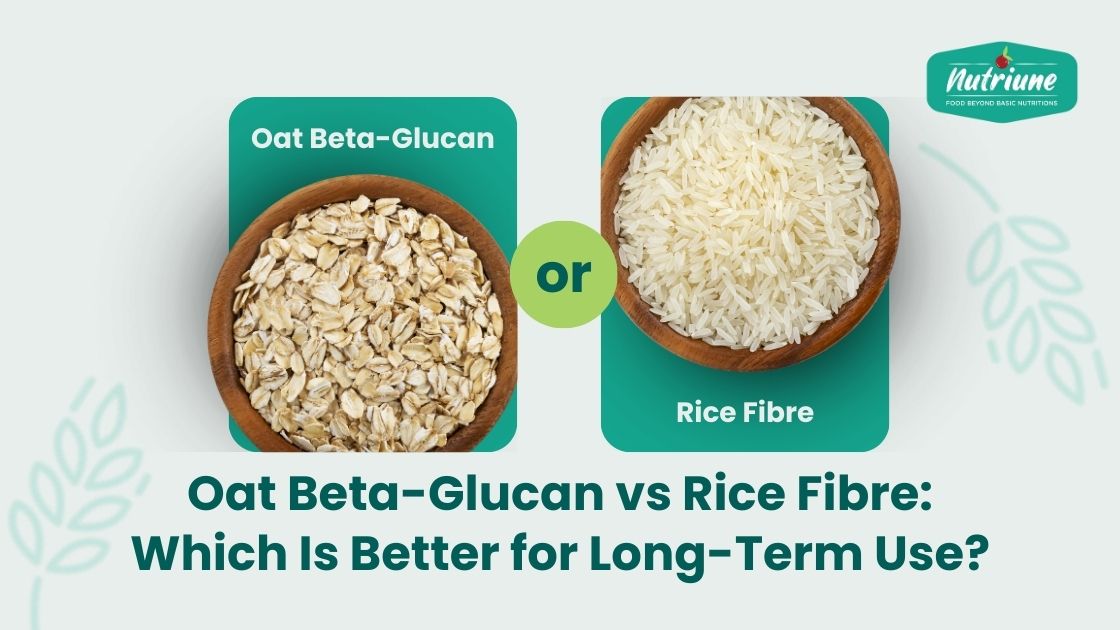
When it comes to long-term digestive and heart health, different dietary fibres offer different benefits. Two of the most talked-about fibres in recent nutrition research are oat beta-glucan and rice fibre, and they work in very different ways in the body. Understanding which one offers more meaningful long-term advantages requires looking at how each functions, what scientific studies show, and how everyday diets can incorporate them sustainably.
Why Fibre Type Matters for Long-Term Health
Not all dietary fibre works the same way in the body. Soluble fibres like oat beta-glucan dissolve in water and form a gel-like substance, while insoluble fibres such as rice fibre primarily add bulk to stool.
According to research from National Institutes of Health different fibre types influence cholesterol, digestion, and blood sugar in distinct ways, making it important to choose the right type based on your health goals.
In this article, we unpack the science, compare real-world effects, and explore how combinations of fibres including supplements like Nutriune can support your wellness goals over time.
What Is Oat Beta-Glucan?
Oat beta-glucan is a type of soluble fibre found in oat bran and oat products. What makes it special is its gel-forming ability when mixed with water in the gut this slows digestion and helps bind cholesterol and glucose to improve metabolic responses. β-Glucan from oats has been studied extensively for its health effects.
In clinical trials, consuming concentrated oat beta-glucan has been shown to significantly reduce total cholesterol and LDL “bad” cholesterol in adults with elevated cholesterol levels compared to control diets.
Oat beta-glucan also appears to affect satiety by slowing nutrient absorption, helping you feel fuller longer a key factor in weight and metabolic health.
Scientifically Proven Heart Health Benefits
Oat beta-glucan is one of the few fibres officially recognized for its cholesterol-lowering effects. Health authorities including the
U.S. Food and Drug Administration
have approved health claims linking beta-glucan intake to reduced risk of heart disease.
Studies show that consuming at least 3 grams daily can significantly lower LDL cholesterol levels when combined with a balanced diet.
For product-based support, explore Nutriune.
What Is Rice Fibre?
Rice fibre comes from rice bran and hulls and is mainly an insoluble fibre. It does not dissolve in water and is not fermented in the gut to the same extent as soluble fibres. Insoluble fibres add bulk to stool and support regular bowel movements, aiding digestion and preventing constipation.
Rice does contain small amounts of beta-glucan, particularly in specific rice varieties, but in much lower concentrations than oats.
In contrast to oat beta-glucan, rice fibre’s effects on cholesterol and metabolic markers are less pronounced in most studies. One controlled trial showed that LDL cholesterol reduction was greater with beta-glucan–enriched foods than rice bran–enriched foods, suggesting that the soluble fibre in oats may be more effective for heart health.
How Oat Beta-Glucan Works in the Body
Cholesterol and Heart Health
Beta-glucan’s most powerful claim to fame is its cholesterol-lowering effect. When oat beta-glucan forms a viscous gel in the digestive tract it binds bile acids that contain cholesterol. This helps remove them from the body instead of allowing them to be reabsorbed. As a result, the liver pulls more LDL cholesterol out of the bloodstream.
Meta-analyses and randomized trials show that a daily intake of around 3 grams of beta-glucan can lower LDL and total cholesterol levels. Reductions of about 5–10% are often seen within several weeks.
Blood Sugar Regulation
Because oat beta-glucan slows carbohydrate absorption, it can also support blood sugar stability. Some research shows that regular intake is associated with improved glucose responses. This may also help support insulin sensitivity, which is especially important for people at risk of type 2 diabetes.
These effects are supported by findings that soluble fibre slows gastric emptying and carbohydrate absorption, improving glycemic response.
How Rice Fibre Functions Differently
Rice fibre mainly supports digestive health rather than metabolic regulation. Insoluble fibres from rice add bulk to stool and help speed up intestinal transit. This promotes regular bowel movements and may protect against certain digestive issues.
Unlike soluble fibres such as oat beta-glucan, rice fibre does not form a viscous gel in the digestive tract. As a result, its effects on cholesterol and blood sugar are generally weaker. While whole grains like rice support overall digestion, their fibre composition usually does not provide the same systemic health benefits associated with beta-glucan.
Soluble vs Insoluble Fibre Explained
Understanding the difference between soluble and insoluble fibre helps clarify why oat beta-glucan and rice fibre behave differently in the body.
- Soluble fibre dissolves in water, forming a gel that slows digestion and helps regulate blood sugar and cholesterol.
- Insoluble fibre does not dissolve and instead supports digestion by increasing stool bulk.
A detailed breakdown can be found in Harvard education.
Comparing Long-Term Benefits: Oat Beta-Glucan vs Rice Fibre
Here’s a breakdown of how these two fibres stack up for long-term use.
Heart Health
- Oat beta-glucan: Strong evidence shows regular intake lowers LDL and total cholesterol.
- Rice fibre: Less evidence for cholesterol reduction; benefits are more modest.
Winner: Oat beta-glucan, especially for cardiovascular health goals.
Digestive Health
- Oat beta-glucan: Soluble fibre can aid satiety and digestive fermentation but may be gentler for some than pure insoluble fibre.
- Rice fibre: Excellent for enhancing regular bowel movements and bulk.
Winner: Tie, each serves a slightly different digestive purpose.
Blood Sugar Control
- Oat beta-glucan: The gel effect slows glucose absorption, supporting steady blood sugar profiles.
- Rice fibre: Limited direct evidence for glycemic control.
Winner: Oat beta-glucan.
Practicality and Everyday Use
Oat beta-glucan is most concentrated in oats and oat products, which are versatile breakfast and recipe staples. Rice fibre is easy to get through whole grain rice and bran products but may require pairing with other foods to boost its health impact.
Which Fibre Is Better for Your Lifestyle?
Choosing between oat beta-glucan and rice fibre depends on your personal health priorities:
- If your focus is heart health and cholesterol, oat beta-glucan offers stronger clinical evidence.
- If your goal is digestive regularity, rice fibre plays an important role.
- For overall wellness, combining both types provides the most comprehensive benefits.
Real-world results from fibre-based nutrition can be explored on Nutriune.
Real Life: Combining Fibres for Long-Term Wellness
Rather than seeing oat beta-glucan and rice fibre as rivals, many nutrition experts recommend incorporating a variety of fibres in your diet for broader benefits:
- Start your day with oatmeal or oat bran to harness soluble beta-glucan.
- Pair meals with whole grain rice or brown rice to support digestive bulk and sustained energy.
- Add legumes, fruits, and vegetables to further diversify your fibre intake.
Looking for convenience or targeted support? A high-quality dietary supplement like Nutriune can help you consistently meet your soluble and insoluble fibre needs while supporting heart and digestive health especially when whole food options aren’t available or convenient.
What This Means for Everyday Diets
In everyday eating patterns, oat beta-glucan’s unique soluble gel-forming property gives it an edge for heart health and metabolic effects. Rice fibre plays a valuable role too, but mainly for digestive regularity and general fibre intake.
By incorporating both into a balanced diet, you benefit from the cholesterol-lowering and blood sugar-modulating power of oat beta-glucan, while also enjoying digestive support from rice fibre and other whole grains.
Common Mistakes When Increasing Fibre Intake
Many people increase fibre intake too quickly or without balance, which can lead to discomfort.
Common mistakes include:
- Not drinking enough water
- Adding fibre supplements without dietary balance
- Ignoring the difference between soluble and insoluble fibre
Gradually increasing intake and combining different fibre sources helps your body adapt more effectively.
Final Thoughts: Choosing What Fits Your Goals
For long-term use, oat beta-glucan provides broader benefits for cholesterol and metabolic health due to its soluble properties. Rice fibre supports digestive regularity and helps maintain a fibre-rich diet.
If your goal is improved cardiovascular health, stable blood sugar and enhanced metabolic support. Foods rich in oat beta-glucan a targeted supplement like Nutriune are excellent additions to your daily routine alongside a balanced diet.
Frequently Asked Questions (FAQs)
Q1: Is oat beta-glucan better than rice fibre?
Oat beta-glucan provides stronger benefits for cholesterol reduction and blood sugar control, while rice fibre mainly supports digestion. Both serve different purposes in a balanced diet.
Q2: How much oat beta-glucan should I consume daily?
Most research suggests around 3 grams per day to support cholesterol reduction and heart health.
Q3: Can I combine oat beta-glucan and rice fibre?
Yes, combining soluble and insoluble fibre provides more comprehensive digestive and metabolic benefits.
Q4: Does rice fibre help with blood sugar control?
Rice fibre has limited direct impact on blood sugar compared to soluble fibres like oat beta-glucan.
Q5: Where can I learn more about fibre-based nutrition support?
You can visit Nutriune for more information and guidance.