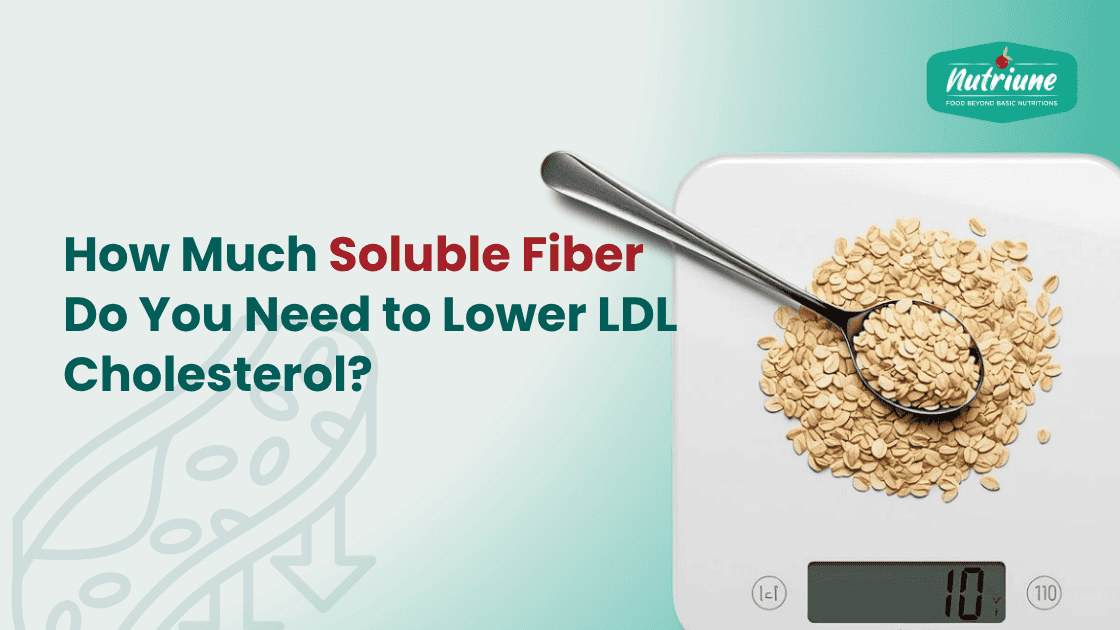
If you’ve been trying to lower your LDL cholesterol naturally, you’ve probably heard one recommendation repeatedly: increase your fiber intake. But this often leads to a more specific and important question:
How much soluble fiber do you actually need to lower LDL cholesterol effectively?
The answer is more precise than most people think. While general advice suggests eating “more fiber,” clinical research shows that specific types and amounts of soluble fiber are required to produce measurable results.
Understanding how much you need and how it works can help you take a far more targeted and effective approach to managing your cholesterol.
What Is Soluble Fiber and Why Does It Matter?
Fiber is a type of carbohydrate that your body cannot fully digest. It is generally divided into two types:
- Insoluble fiber, which helps with digestion and bowel movement
- Soluble fiber, which dissolves in water and forms a gel-like substance in the gut
It is soluble fiber that plays a key role in lowering LDL cholesterol.
When consumed, soluble fiber interacts with bile acids in your digestive system. These bile acids are made from cholesterol. By binding to them, soluble fiber helps remove cholesterol from the body before it can be reabsorbed into the bloodstream.
This process directly contributes to reducing LDL cholesterol levels.
How Much Soluble Fiber Do You Need?
This is where things become more specific and more useful.
Clinical studies have consistently shown that consuming around 5 to 10 grams of soluble fiber per day can help reduce LDL cholesterol.
However, not all soluble fibers are equally effective. One of the most studied and reliable forms is oat beta-glucan.
Research has demonstrated that:
- 3 grams of oat beta-glucan per day can significantly reduce LDL cholesterol
- This amount is sufficient to produce measurable improvements in cardiovascular health
- The effect becomes stronger with consistent daily intake
This is why many health authorities and clinical guidelines emphasize this specific dosage.
Why Oat Beta-Glucan Is Especially Effective
Not all sources of soluble fiber deliver the same results. Oat beta-glucan stands out because of its unique structure and function.
When consumed, it forms a viscous gel in the digestive tract. This gel:
- Binds to cholesterol and bile acids
- Slows down nutrient absorption
- Reduces cholesterol reabsorption into the bloodstream
Over time, this leads to a noticeable reduction in LDL cholesterol levels.
In fact, oat beta-glucan has been studied for over 40 years, with strong clinical evidence supporting its effectiveness in cholesterol management.
How Long Does It Take to See Results?
One of the most common misconceptions is expecting immediate results.
Lowering LDL cholesterol naturally takes time. Most studies show that:
- Initial improvements can be seen within 3 to 4 weeks
- More significant reductions occur over 6 to 8 weeks
- Long-term consistency leads to sustained benefits
This means that soluble fiber is not a quick fix it is a long-term strategy for improving health.
The Problem with “Just Eat More Fiber” Advice
While increasing fiber intake is good advice, it is often too vague to be effective.
Many people:
- Do not know how much soluble fiber they are actually consuming
- Rely on general dietary changes without measurable targets
- Fail to reach clinically effective doses
As a result, they may not see meaningful improvements in their cholesterol levels.
A more effective approach is to focus on specific, measurable intake such as ensuring you consume at least 3 grams of beta-glucan daily.
Best Sources of Soluble Fiber
There are several natural sources of soluble fiber that can support cholesterol reduction.
1. Oats and Oat-Based Products
Oats are one of the richest sources of beta-glucan. However, the amount can vary depending on processing and portion size.
2. Legumes
Beans, lentils, and chickpeas contain soluble fiber, though in varying amounts.
3. Fruits
Certain fruits like apples, oranges, and berries provide soluble fiber, but typically in smaller quantities.
4. Functional Formulations
Some formulations combine multiple ingredients to deliver a consistent and clinically effective dose of soluble fiber.
These options can be particularly useful for individuals who struggle to meet their daily fiber requirements through food alone.
Why Consistency Matters More Than Quantity
While hitting the recommended daily intake is important, consistency is even more critical.
Consuming soluble fiber occasionally will not produce lasting results. The cholesterol-lowering effect depends on maintaining a steady intake over time.
Consistent consumption helps:
- Maintain lower LDL cholesterol levels
- Support metabolic balance
- Improve digestive health
This aligns with long-term clinical findings showing that sustained intake of beta-glucan leads to measurable health improvements.
Soluble Fiber and Overall Metabolic Health
Beyond lowering LDL cholesterol, soluble fiber provides additional benefits that support overall health.
These include:
- Improved blood sugar control
- Enhanced gut health
- Increased satiety, which can help with weight management
These combined effects make soluble fiber a powerful tool not just for cholesterol management but for overall metabolic health.
Why Many People Still Struggle to Lower LDL
Despite knowing the importance of fiber, many people fail to achieve their cholesterol goals.
Common reasons include:
- Inconsistent intake
- Underestimating required amounts
- Poor diet quality overall
- Lack of targeted nutritional strategy
Simply reducing saturated fat is often not enough. Without actively increasing beneficial nutrients like soluble fiber, progress can be limited.
A Smarter Approach to Lowering LDL Cholesterol
Instead of focusing only on restriction, a more effective strategy is to combine reduction with addition.
This means:
- Reducing harmful dietary patterns
- Adding clinically proven ingredients
- Maintaining consistency over time
For example, combining soluble fiber with other functional ingredients such as prebiotics and low-glycemic carbohydrates can provide broader support for metabolic health.
This type of integrated approach reflects modern, science-based nutritional strategies
Who Benefits Most from Soluble Fiber?
Soluble fiber is particularly beneficial for:
- Individuals with high LDL cholesterol
- People at risk of cardiovascular disease
- Those seeking natural alternatives to medication
- Health-conscious individuals focused on prevention
Many people today are looking for safe, non-pharmaceutical ways to manage their cholesterol. Soluble fiber offers a clinically supported option that fits into a sustainable lifestyle.
The Final Answer: How Much Soluble Fiber Do You Need?
So, how much soluble fiber do you actually need to lower LDL cholesterol?
The evidence is clear:
- 5 to 10 grams of soluble fiber per day can help reduce LDL cholesterol
- 3 grams of oat beta-glucan daily is one of the most effective and clinically supported targets
But beyond the numbers, what matters most is:
- Consistency
- Quality of fiber
- Overall dietary habits
By focusing on these factors, you can take a more precise and effective approach to managing your cholesterol naturally.
FAQ
1. How much soluble fiber is needed to lower LDL cholesterol?
About 5 to 10 grams of soluble fiber daily can help reduce LDL cholesterol, with 3 grams of oat beta-glucan being especially effective.
2. What is the best type of soluble fiber for cholesterol?
Oat beta-glucan is one of the most effective types due to its strong clinical evidence in lowering LDL cholesterol.
3. How long does soluble fiber take to lower cholesterol?
Most people begin to see results within 3 to 4 weeks, with more significant changes after 6 to 8 weeks of consistent intake.
4. Can I get enough soluble fiber from food alone?
It is possible, but many people find it difficult to consistently reach the effective daily amount through food alone.
5. Does fiber reduce cholesterol immediately?
No, fiber works gradually. Consistent daily intake is required to achieve and maintain lower LDL cholesterol levels.